 Bellingham Roofing
 Sudden Valley's Setting Creates Its Own Siding Problems
Sudden Valley sits above Lake Whatcom in a heavily wooded pocket of the county, and that setting is exactly why siding fails faster here than it does on an open lot in town. Mature tree canopy blocks direct sun from large sections of most roofs and walls for much of the day. Add the lake's humidity and Whatcom County's long wet season, and you get siding that stays damp far longer after a storm than it would on a south-facing wall in a cleared subdivision. That combination — shade, moisture, and time — is the exact recipe for moss, algae, and the slow rot that shows up behind cheap or poorly installed siding.
Heavy Tree Cover and Shade
Homes tucked under fir and cedar canopy dry out slower after every rain. Wood-based siding products and lower-grade composites absorb that lingering moisture at the grain and at every seam, which is where swelling, delamination, and soft spots start. Fiber cement doesn't have wood grain to absorb water the same way, which matters more here than it does on a dry, sun-exposed lot elsewhere in the county.
Moisture Off the Lake and a Long Wet Season
Lake-adjacent air stays damp longer than air over drier inland ground, and Bellingham's driving rain doesn't let up for months at a stretch. Siding on a Sudden Valley home spends more of the year wet than siding on a comparable home in a drier part of Whatcom County. Whatever goes on the wall needs to handle sustained moisture exposure, not just an occasional storm.
Why Fiber Cement Is the Right Material for This Climate
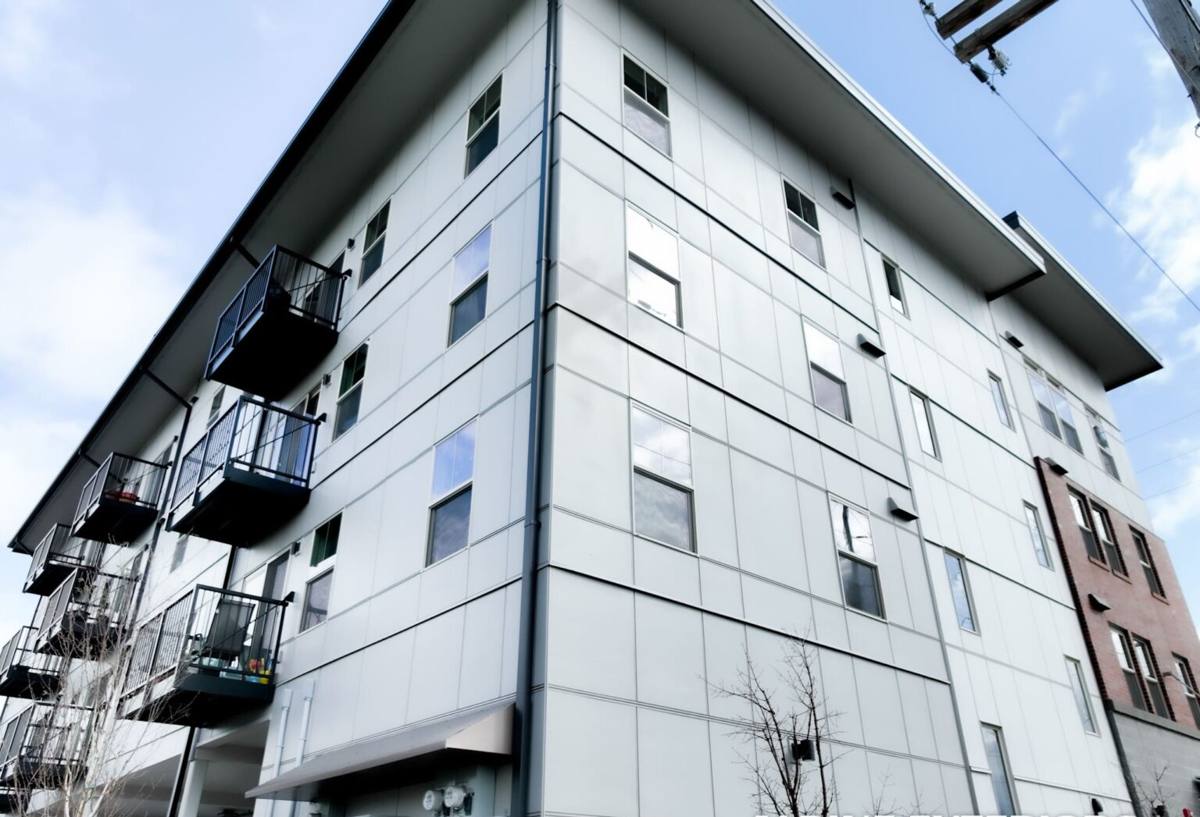
James Hardie fiber cement is manufactured from cement, sand, and cellulose fibers — there's no wood grain to swell, no foam core to trap water, and no combustible core. It's dimensionally stable in wet-dry cycles, which is the exact stress that heavy shade and long rainy stretches put on a wall. Hardie also builds region-specific product lines through its HZ5 engineering for climates like ours, meaning the boards installed on a Sudden Valley home are formulated for Pacific Northwest wet-and-shade conditions rather than a generic national spec.
The factory-applied ColorPlus finish is part of why this matters locally. A factory finish is baked on and backed by its own finish warranty, so the color coat isn't the weak point the way field-applied paint often becomes on a shaded wall where mildew and algae get a head start. On a sun-starved lot, that finish durability buys years of maintenance-free color that a repainted wood or composite product usually can't match.
What a Correct Fiber Cement Job Actually Involves
Fiber cement siding is only as good as the water management behind it. This is true everywhere, but it's non-negotiable on a shaded, moisture-heavy lot where a mistake doesn't dry out for weeks. A correct job isn't just nailing boards to a wall — it's a system.
Water Management Details That Matter Here
- Weather-resistant barrier installed and lapped correctly behind the siding, with no gaps at seams or penetrations
- Proper flashing at every window, door, and roofline transition — the single most common failure point on older homes we inspect
- Minimum clearance maintained between the bottom of the siding and grade, decking, or roofing to keep splashback and standing moisture off the board edge
- Rain screen or drainage gap where the wall assembly calls for it, so damp siding can actually dry to the outside instead of staying wet against the sheathing
- Caulking limited to where Hardie's install specs actually call for it — over-caulking traps moisture instead of shedding it
- Fasteners driven to Hardie's specified pattern and depth, not overdriven or underdriven, which affects both water resistance and the product warranty
Fastening and Clearances
Fiber cement is unforgiving of shortcuts at the fastening stage. Overdriven nails crack the board's face over time; underdriven nails leave gaps that pull loose in wind. Hardie's written install specs cover fastener type, spacing, and embedment depth for a reason — skip them and you can void the manufacturer warranty even though the boards themselves are sound. This is the stage where an experienced crew earns its keep, and it's also the stage most likely to get rushed by a crew that doesn't install Hardie regularly.
Why We Only Install James Hardie
We don't install vinyl, LP SmartSide, primed wood, or the lower-cost fiber cement alternatives like Cemplank or Allura. That's a deliberate standard, not a sales pitch. Vinyl expands and contracts more than fiber cement in temperature swings and can warp against dark colors or heat reflection off neighboring surfaces. LP SmartSide and primed wood products are wood-based at the core, which means the same moisture sensitivity that makes shaded, damp lots hard on wood trim also applies to the siding itself. The lower-cost fiber cement brands can be reasonable products, but they don't carry Hardie's ColorPlus finish system, HZ5 climate engineering, or the same length of proven install track record and warranty backing in this region.
None of that means those products are junk — it means we've made a call about what holds up on the walls we're responsible for, especially on lots like the ones in Sudden Valley where the material has less help from sun and airflow than it would elsewhere.
Comparing the Options for a Shaded, Damp Lot
| Factor | Vinyl Siding | Wood-Based Composite (LP/Primed) | James Hardie Fiber Cement |
|---|---|---|---|
| Moisture behavior in shade | Doesn't absorb water, but seams can trap it behind the panel | Absorbs moisture at cut edges and grain; slow to dry under canopy | Dimensionally stable; doesn't swell or rot from sustained damp exposure |
| Finish durability | Color molded in but can fade/chalk over time | Requires paint maintenance on a cycle, sooner in shade | Factory ColorPlus finish backed by its own warranty |
| Fire resistance | Combustible | Combustible | Non-combustible |
| Typical maintenance cycle | Occasional wash; replace if cracked or warped | Repaint and caulk maintenance every several years | Occasional wash; touch-up rare when installed and finished correctly |
| Install sensitivity | Moderate | Moderate to high | High — correct fastening and flashing are essential to the warranty |
Our Process on a Sudden Valley Home
Every property here is a little different depending on how much canopy it sits under and how the lot drains, so the process starts with a real look at the specific house rather than a generic quote.
Assessment and Tear-Off
We check the existing wall assembly, look for moisture damage already hiding behind old siding, and confirm what the sheathing and barrier underneath actually need before anything new goes up. On a shaded lot, this step often turns up soft spots near ground level or around old flashing that wouldn't be visible from the outside.
Water Management First
Barrier, flashing, and drainage details go in before a single piece of Hardie touches the wall. This is the part of the job that determines whether the siding lasts fifteen years or fifty, and it's the part that's easiest for an unfamiliar crew to shortcut.
Installation to Spec
Boards, panels, and trim go up following Hardie's fastening and clearance requirements exactly, with attention to the grade and roofline clearances that matter most on a wooded lot. Joints and penetrations get sealed and flashed according to spec, not by habit.
Cleanup and Walkthrough
We clear debris, confirm the finish and seams look right in daylight, and walk the job with the homeowner before calling it done.
Moss, Algae, and Ongoing Care in This Setting
Even with the right siding, a shaded Sudden Valley lot will grow moss and algae faster than an open one — that's the tree cover and lake humidity at work, not a defect in the material. The difference fiber cement makes is that moss and algae sit on the surface of a factory-finished board instead of working into a grain or a paint layer that's already breaking down. A periodic gentle wash (never a high-pressure blast that can force water behind panels) keeps growth from building up, and correctly installed flashing keeps that surface growth from ever becoming a moisture problem underneath.
Why a Crew That Already Works Sudden Valley Matters
A crew that regularly works this community already understands the access considerations, the tree-cover-driven moisture patterns lot by lot, and how Whatcom County's permitting applies to exterior work in unincorporated areas versus inside Bellingham city limits. That's less relearning on your job, fewer surprises mid-project, and a finished result that's actually built for the conditions your specific lot deals with — not a one-size-fits-all install pulled from a drier, sunnier neighborhood across town.
If you're planning a siding project in Sudden Valley, we're happy to take a look and walk the property with you. Reach out for a free, no-pressure estimate — there's a form right below to get started.