 Bellingham Roofing
 Why Roofs in Sudden Valley Wear on Their Own Timeline
Sudden Valley sits back in the trees along Lake Whatcom, southeast of downtown Bellingham, and that setting changes how a roof ages. Lots here tend to have heavier tree cover than most in-town Bellingham properties, which means more shade, more standing moisture after a storm passes, and a steady drop of fir and cedar needles that collect in valleys, behind chimneys, and along lower roof edges. Combine that with Whatcom County's long wet season and the driving rain that rolls in off the water, and you get a roof that spends a bigger share of the year fighting moss and trapped moisture than a roof out in the open.
None of this means a Sudden Valley roof is doomed to fail early. It means the replacement needs to be specified for shade and moisture from day one — not installed the same way you'd install a roof on a treeless lot in full sun.
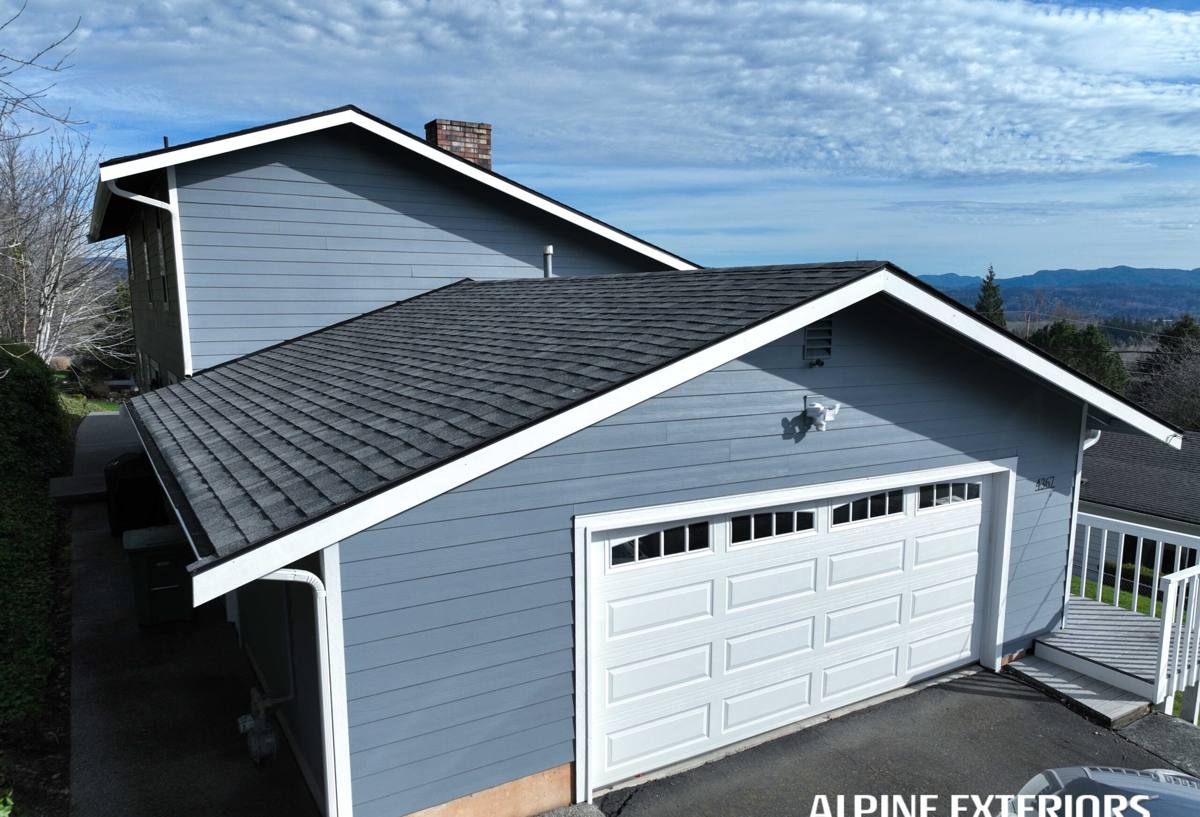
Signs a Sudden Valley Roof Has Reached Replacement, Not Repair
A lot of homeowners in this neighborhood call us thinking they need moss removal or a few shingle repairs, and sometimes that's true. But moss and shade accelerate a handful of problems that repair alone won't fix once they've gone far enough. Here's what tells us a full replacement is the honest recommendation:
- Moss has worked into the shingle mat itself, not just sitting on the surface — lifting tabs and holding water against the roof deck
- Granule loss is heavy enough that you can see bare asphalt in more than a few spots, especially on north-facing slopes that never fully dry out
- Soft or spongy decking under a section of roof, usually near valleys or where needle debris has piled up for years
- Daylight or water staining in the attic near roof penetrations, chimneys, or skylights
- Shingles that are curling, cupping, or cracking across a large portion of the roof rather than in one isolated area
- The roof is already past 20-25 years old, which is a realistic ceiling for standard asphalt shingles under this kind of tree cover, even with good maintenance
If it's one or two of these in a small area, a repair can buy time. If it's several at once, patching just moves the failure point somewhere else on the same roof within a season or two.
What a Correct Roof Replacement Involves Here
Full Tear-Off and Deck Inspection
We don't install new roofing over old material on any home, and it matters even more in a shaded, moisture-heavy setting like Sudden Valley. A tear-off is the only way to actually see the deck, and in homes with a history of moss or slow leaks, that's where we find soft plywood, rusted fasteners, or rot around valleys that never shows up from the ground. Replacing bad decking during the tear-off, rather than skipping it to save time, is what keeps a new roof from failing early in the exact spots the old one did.
Ventilation Sized for a Shaded, Moisture-Heavy Lot
A roof under heavy tree cover holds moisture in the attic longer than one in the open, simply because the sun isn't hitting it to help dry things out. Balanced intake and exhaust ventilation — enough soffit vents feeding enough ridge or roof vents — matters more here than on an unshaded lot. Undersized or blocked ventilation is one of the quieter reasons roofs in this neighborhood develop deck rot and moss recurrence even after a full replacement.
Underlayment and Flashing Built for Standing Moisture
We use synthetic or self-adhered underlayment at valleys, eaves, and any low-slope transitions rather than relying on minimum-code coverage, because those are the areas where moss and debris hold water the longest. Flashing around chimneys, skylights, and wall intersections gets rebuilt during the tear-off, not caulked over — caulk is a temporary patch, not a flashing system, and it's usually the first thing to fail under repeated wet-dry cycling.
Choosing the Right Material for a Shaded Sudden Valley Lot
There's no single "best" roofing material for this neighborhood — the right choice depends on how much sun a particular lot gets, what the homeowners association will approve, and how much long-term moss maintenance a homeowner wants to take on. Here's how the common options compare for a property with significant tree cover:
| Material | Moss Resistance | Maintenance | Typical Lifespan Here |
|---|---|---|---|
| Standard asphalt composition shingle | Moderate — needs periodic cleaning under shade | Moss/debris removal every few years | 18-25 years under heavy tree cover |
| Algae-resistant (copper-granule) asphalt shingle | Better resistance to moss and algae staining | Lower, but not maintenance-free | 20-25 years |
| Metal roofing (standing seam) | Sheds moisture fast, resists moss buildup well on steeper slopes | Low; occasional debris clearing | 40-plus years |
| Synthetic shake/slate-look products | Good moisture shedding, consistent appearance | Low to moderate | 30-50 years depending on product |
Metal and synthetic products carry a higher upfront cost, but in a shaded setting like Sudden Valley, the trade-off is fewer moss treatments and less frequent replacement over the life of the home. We'll walk through what makes sense for your specific roof pitch and sun exposure rather than pushing one product across the board.
Access, Trees, and Site Realities Specific to This Neighborhood
Sudden Valley's private, tree-lined roads and sloped driveways change how a job gets staged compared to a flat in-town lot. Dumpster and material placement often has to work around narrower access, and overhead branches sometimes need trimming clearance before tear-off equipment can safely operate — something we scope during the estimate rather than discovering the morning of the job.
Many properties in this community are also subject to homeowners association architectural guidelines that govern roof color and, in some cases, material type. We factor HOA approval timelines into the schedule up front so a material choice doesn't get held up mid-project.
Because Sudden Valley sits within the Lake Whatcom watershed — the source of Bellingham's drinking water — we're careful about what leaves the site. That means proper tarping and cleanup rather than chemical moss treatments or debris runoff heading toward the lake, whether or not it's strictly required on a given job. It's a standard we hold ourselves to because of where the work is happening.
Our Process for a Sudden Valley Roof Replacement
- On-site inspection — we walk the roof and attic, check the deck where accessible, and note tree clearance, HOA considerations, and access constraints for the specific property.
- Written estimate — a clear scope covering material, tear-off, decking allowance, ventilation, and flashing work, with no vague allowances buried in the fine print.
- Scheduling around the weather window — Whatcom County's wet stretches mean we plan tear-off days around forecasts that give us a real dry-in window, not just an open calendar slot.
- Tear-off and same-day dry-in — the old roof comes off and the deck gets covered and protected the same day; we don't leave a roof open overnight.
- Installation — decking repairs, underlayment, flashing, ventilation, and the new roofing system go in to manufacturer specification.
- Cleanup and magnetic sweep — site and surrounding yard get swept for nails and debris, with extra attention near landscaping and any drainage paths on the property.
- Final walk-through — we go over the finished roof with the homeowner before calling the job done.
What Affects the Cost of a Replacement in Sudden Valley
Every roof gets priced on its own specifics, but a few factors show up consistently in this neighborhood and are worth understanding before you get a number:
| Cost Factor | Why It Matters Here |
|---|---|
| Deck condition under old moss/debris buildup | Hidden rot found during tear-off adds material and labor not visible from a roof-only inspection |
| Roof pitch and tree-limited access | Steeper roofs and tight staging areas around trees slow material handling |
| Material choice | Asphalt, metal, and synthetic products carry different upfront costs and different long-term moss-maintenance costs |
| Ventilation upgrades | Adding or correcting intake/exhaust venting on an older home adds scope but reduces future moisture problems |
| HOA-driven material or color requirements | Approved options may narrow choices, which can shift the material cost either direction |
We'd rather walk a homeowner through these factors on their actual roof than quote a number over the phone that doesn't hold up once we're standing on the deck.
Maintaining a New Roof in a Shaded, Moss-Prone Setting
A correctly installed roof still benefits from some ongoing attention when it's living under tree cover. Clearing needle debris from valleys and gutters once or twice a year keeps water moving instead of pooling. A gentle, low-pressure moss treatment on schedule — rather than waiting until moss is thick — protects the shingle mat and keeps the roof shedding water the way it's designed to. And keeping branches trimmed back from the roofline reduces both debris buildup and the risk of physical damage during wind events, which do reach into the valley even with the tree buffer.
Why Local Experience in Sudden Valley Matters
A crew that's only worked open, in-town Bellingham roofs will size ventilation, underlayment, and moss prevention the same way everywhere — and that approach falls short on a shaded lot backed up to Lake Whatcom. Working this neighborhood regularly means we already understand the access realities of the private roads, the HOA approval process, and the watershed considerations that come with the location, so those don't turn into delays or surprises mid-project. It also means we can speak plainly about what your specific lot's sun exposure and tree cover mean for material choice, rather than giving a one-size-fits-all recommendation.
If your Sudden Valley roof is showing its age, we're glad to take a look and give you a straightforward assessment — no pressure, no inflated urgency. Fill out the form below for a free estimate, and we'll walk the roof with you and lay out exactly what it needs.